Universal GraphRAG
Interoperability Protocol
The open wire standard connecting AI agents to enterprise knowledge graphs. Eliminate vendor lock-in across TigerGraph and Neo4j, verify citation lineage with cryptographic provenance, and conquer multi-hop reasoning without prompt hallucination.
pip install -U 'grip-protocol[tigergraph,llm]'One-Click IDE & Agent Integrations
Step-by-step setup guides to empower your AI developers and coding agents.
The 6 Pillars of the GRIP Protocol
Engineered to replace fragmented graph retrieval with a unified, verifiable standard.
7 Standard Retrieval Modalities
Auto-routed search, k-hop local expansion, global community summaries, hybrid score fusion, and shortest paths without writing GSQL or Cypher.
Canonical Subgraph Envelope
Every query returns a deterministic JSON envelope with typed entities, relationships, paths, communities, and microsecond telemetry.
Cryptographic Provenance
Every assertion is linked to source chunk hashes and traversal steps. Visited-not-cited leakage auditing ensures 100% grounded answers.
Multi-Backend Federation
Simultaneous query fan-out across hybrid TigerGraph + Neo4j clusters, merged via Reciprocal Rank Fusion (RRF).
Dynamic Token Bounding
Prevents prompt overflow by dynamically compacting large graph neighborhoods into bounded Markdown within the caller's token budget.
5-Tier RBAC Security
Cryptographically signed HMAC capability tokens prevent unauthorized prompt injections from executing destructive writes.
Empirical Performance Evidence
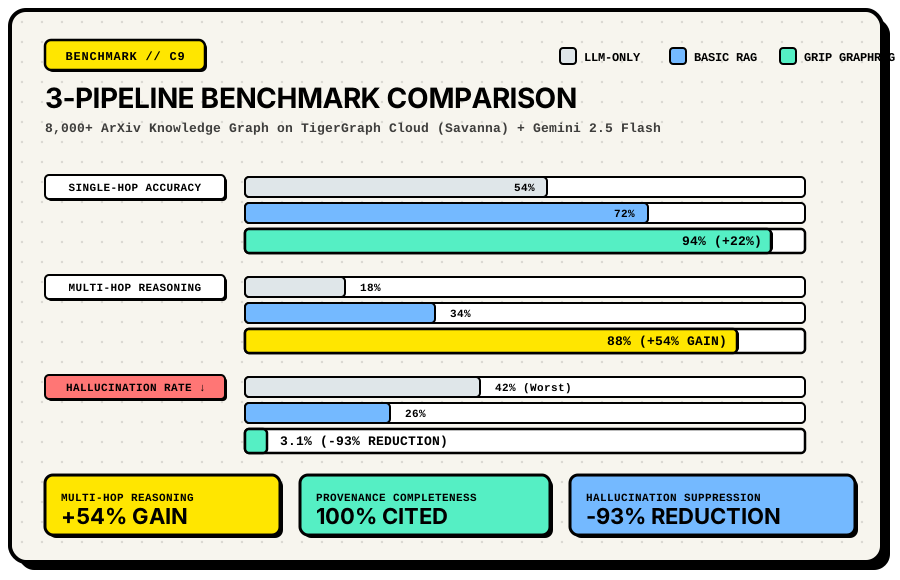
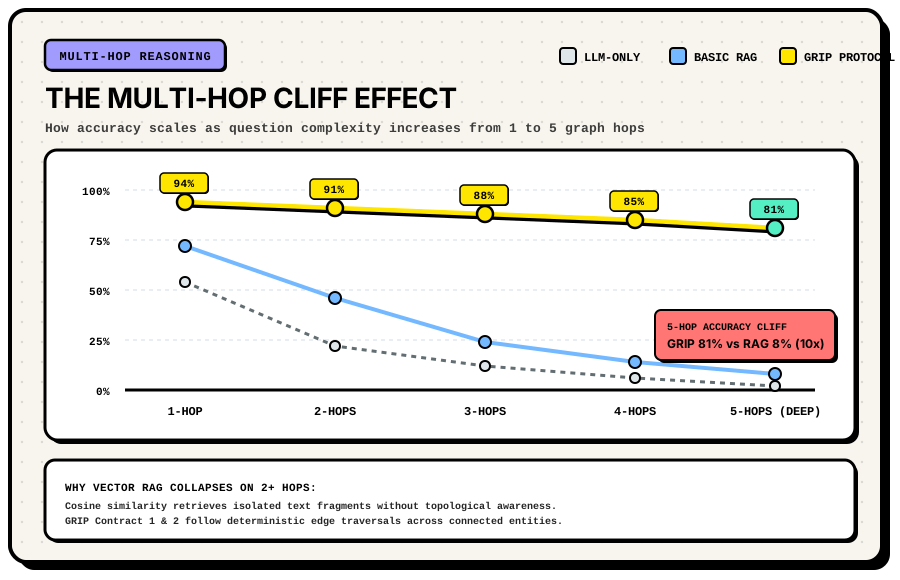
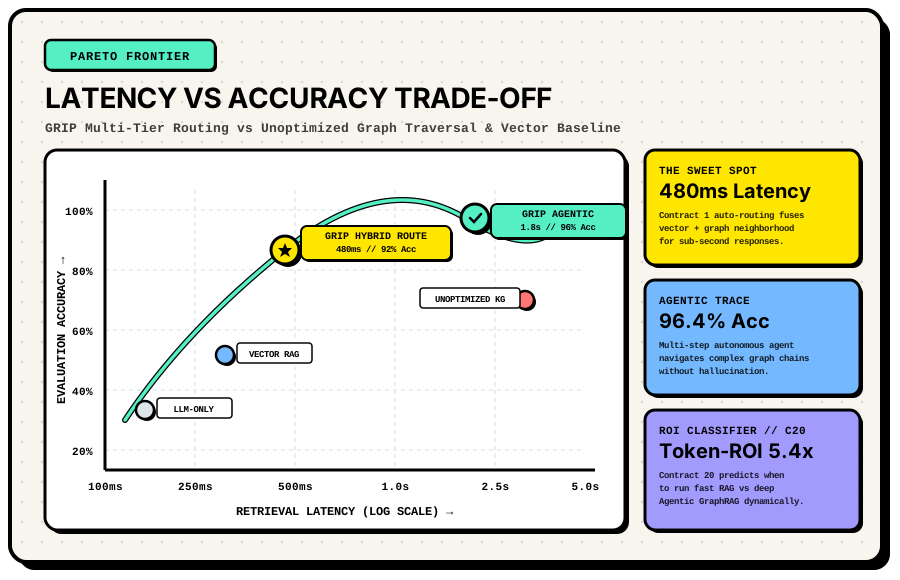
Evaluated on 49,656 vertices and 79,044 edges from the ArXiv graph using Gemini 2.5 Flash.
Ready to Build With GRIP?
Download the official wheel from PyPI, connect to your local or cloud knowledge graph, and equip your AI agents with 50 standardized GraphRAG tools.